Prompt Labor: Basics

Andrew Ellis

24 April, 2024

Assistant menagerie

Assistant Provider Privacy LLM Capabilities Pricing model
ChatGPT OpenAI 👎🏼 GPT-3.5, GPT-4 Web search, DALLE, GPTs, multimodal input 💶
Copilot Microsoft 👍🏼 GPT-3.5, GPT-4 Web search, DALLE, multimodal input 🆓 for BFH employees and students
Gemini Google 👎🏼 Gemini Ultra, Gemini Pro, and Gemini Nano Web search, multimodal input 💶
HuggingChat 🤗 Hugging Face 👍🏼 Various open models, e.g. CodeLlama, Llama 2, Mistral, Gemma 🆓

Orientierungshilfe für Lehrpersonen der BFH

  • Haltung der BFH: Technologien, die den Lernprozess unterstützen und praxisrelevant sind, sollen in die Lehre einbezogen werden.

  • Einsatz von KI in der Lehre: Die Mehrheit der Studierenden wird KI-Tools nutzen. Studierende sollen lernen, Technologien kompetent einzusetzen und kritisch zu hinterfragen.


Knowledge Base der Virtuellen Akademie

PDF

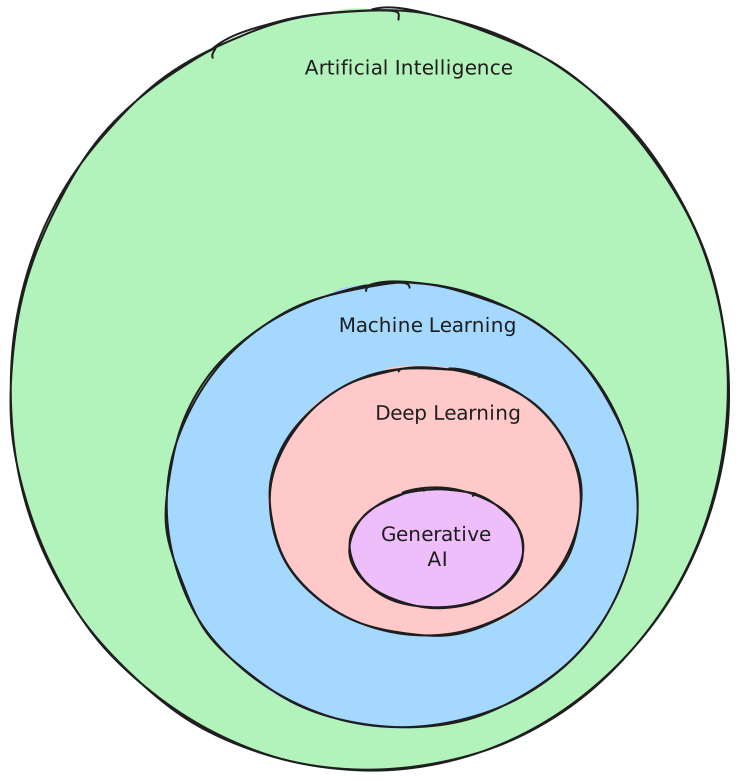
What is Artifical Intelligence?

A branch of computer science that aims to create machines that can perform tasks that typically require human intelligence.

What is a Large Language Model?
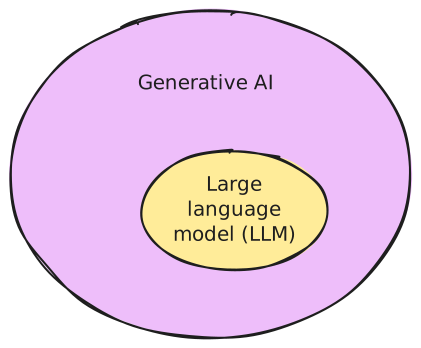
An LLM is a type of generative AI model that is trained to predict the next word following the input (prompt).

Training

How to train a language model
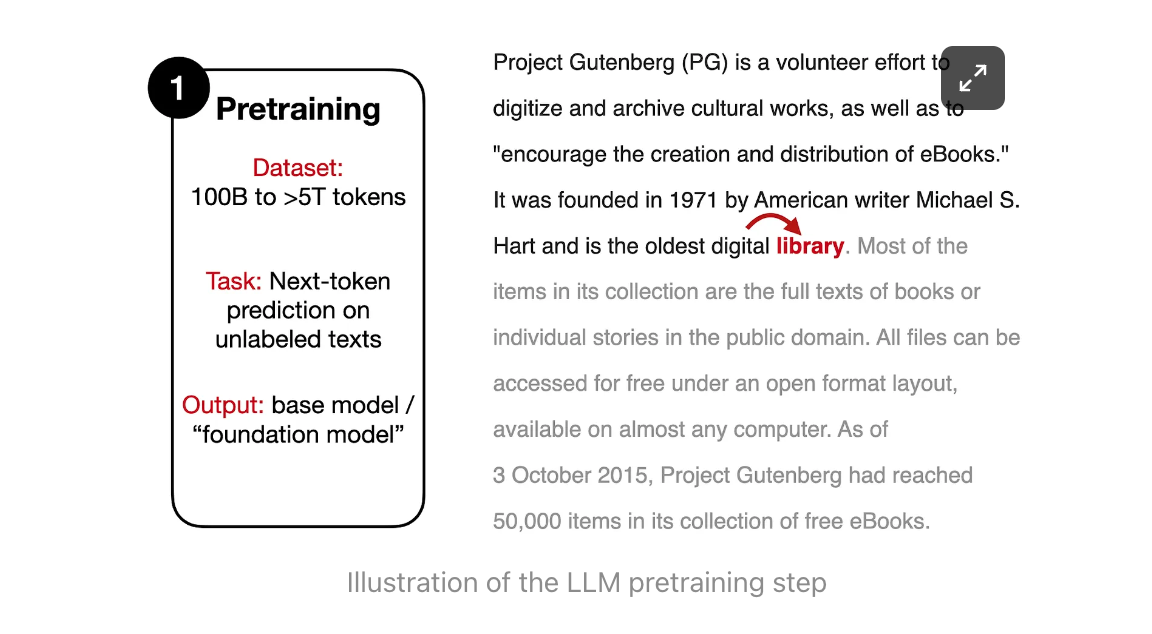


How to train a language model

  • An LLM learns to predict the next word in a sequence, given the previous words: \[ P(word | context) \]
  • Think of as “fancy autocomplete” (but very very powerful and sopisticated)

Text Generation

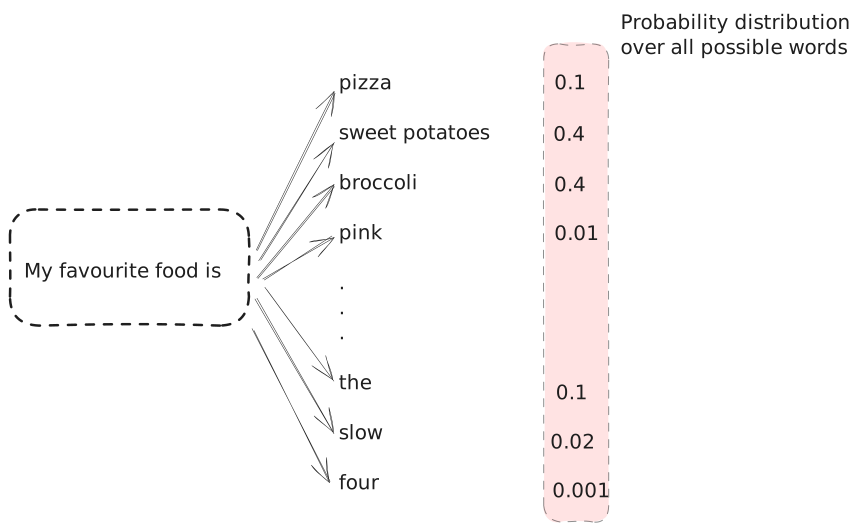
How does an LLM generate text?
Sampling
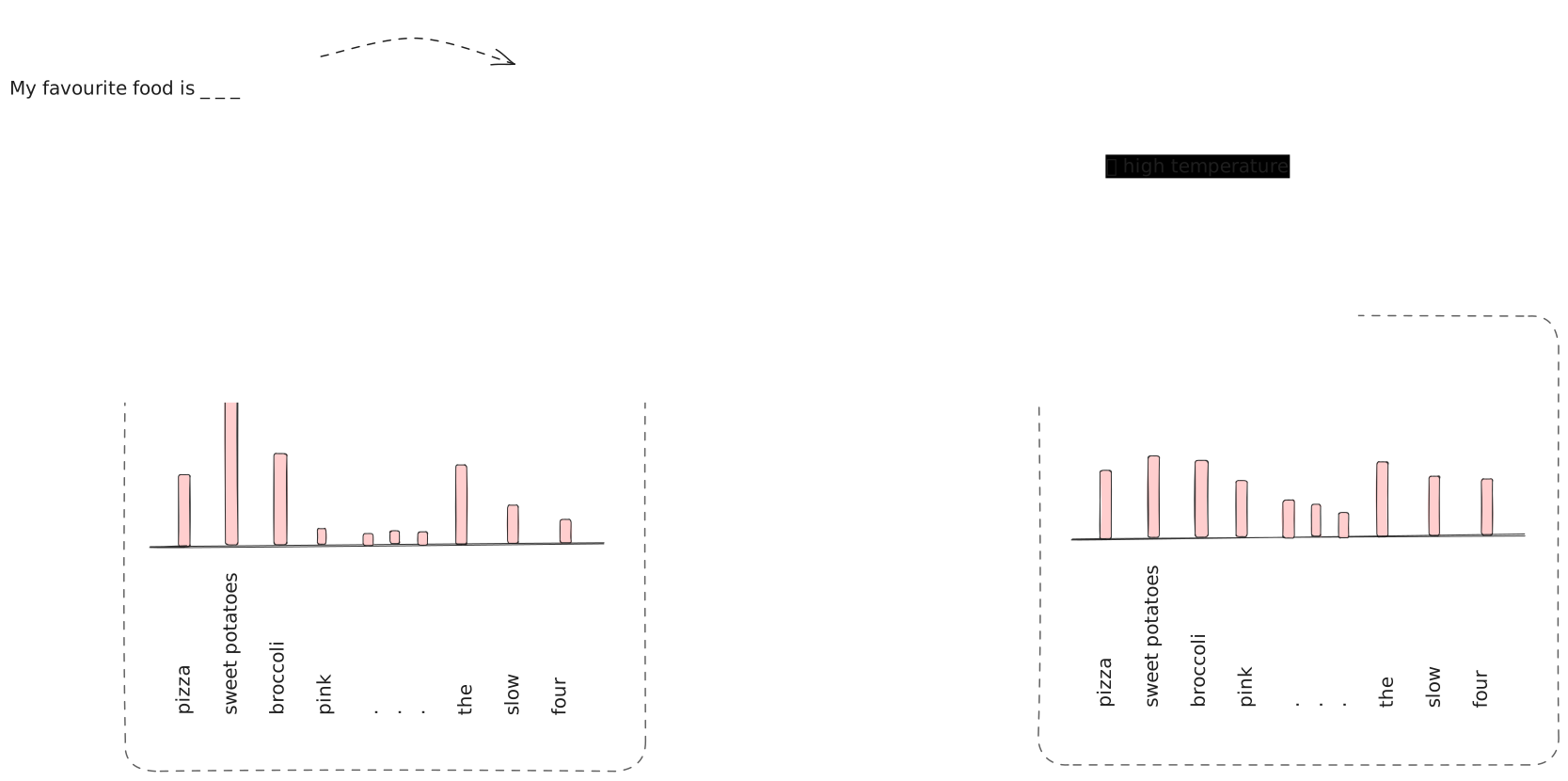
Auto-regressive generation
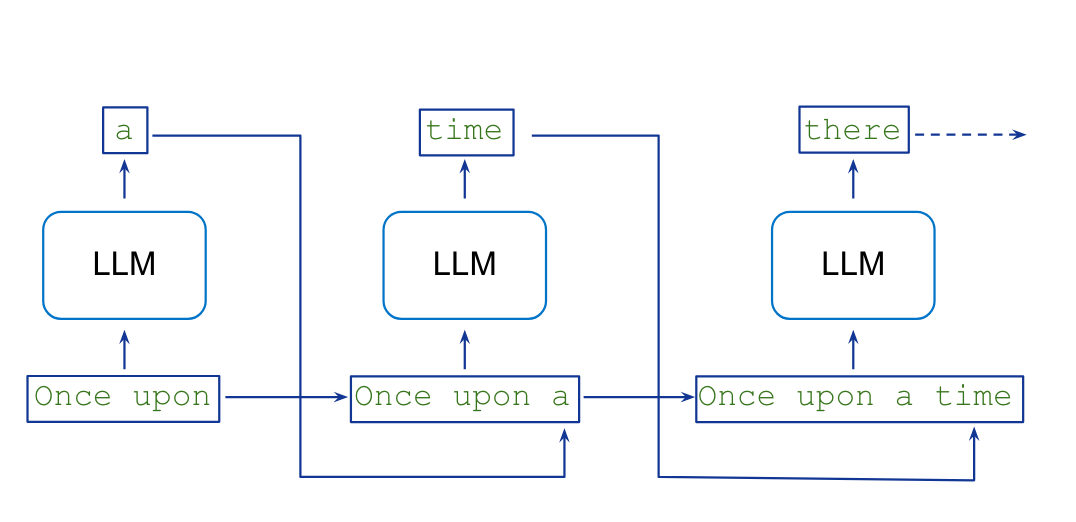
Text is generated one word at a time (actually tokens, not words).

  1. Model predicts which word is likely to follow, given a sequence of tokens (words, punctuation, emojis, etc.).
  2. A word is sampled from the predicted distribution.
  3. The new word is added to the sequence of words (context) that is used to predict the next word.

\[ P(w_{w+1} | w_1, w_2, ..., w_t) \]

Generated text is dependent on the context.

Every token is given an equal amount time (computation per token is constant).

Auto-regressive generation

Foundation models

A foundation model, or large language model (LLM):

  • is a type of machine learning model that is trained to predict the next word following the input (prompt).
  • is trained “simply” to predict the next word following a sequence of words.
  • does not necessarily produce human-like conversations.

: What is the capital of France?

: What is the capital of Germany? What is the capital of Italy? . ..

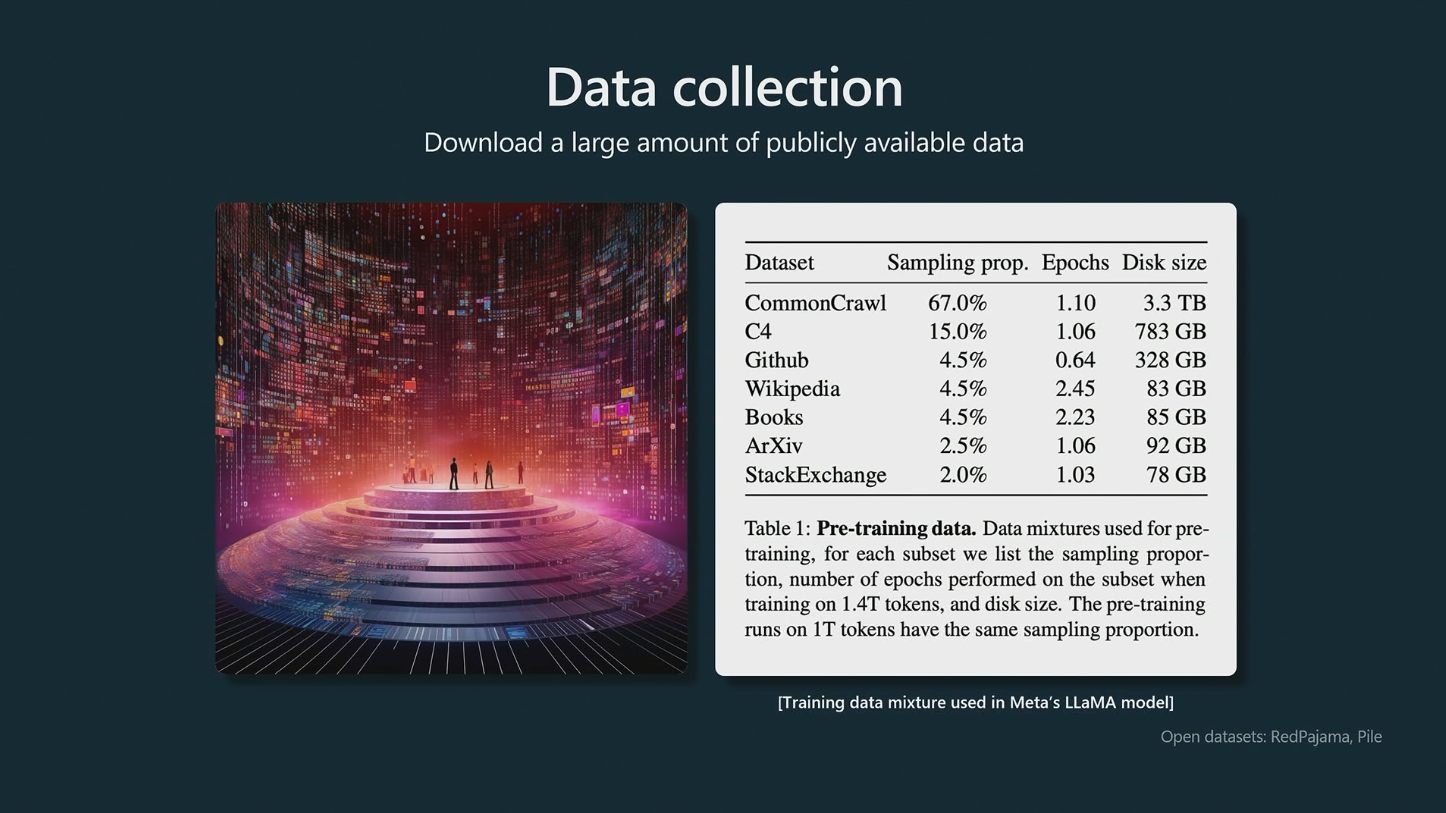
Training data

Figure courtesy of Andrej Karpathy

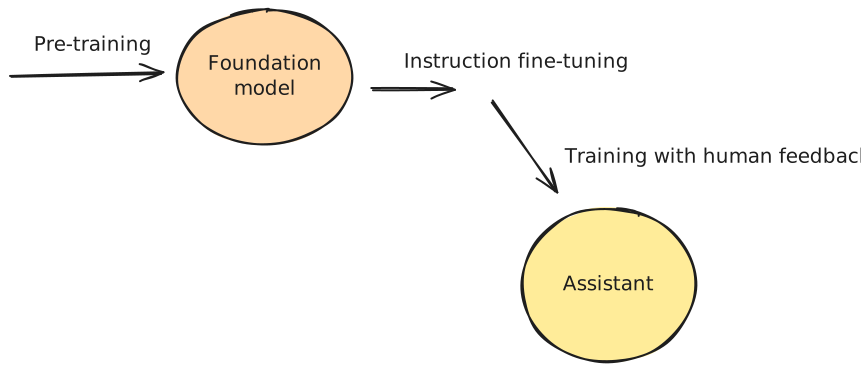
Training process
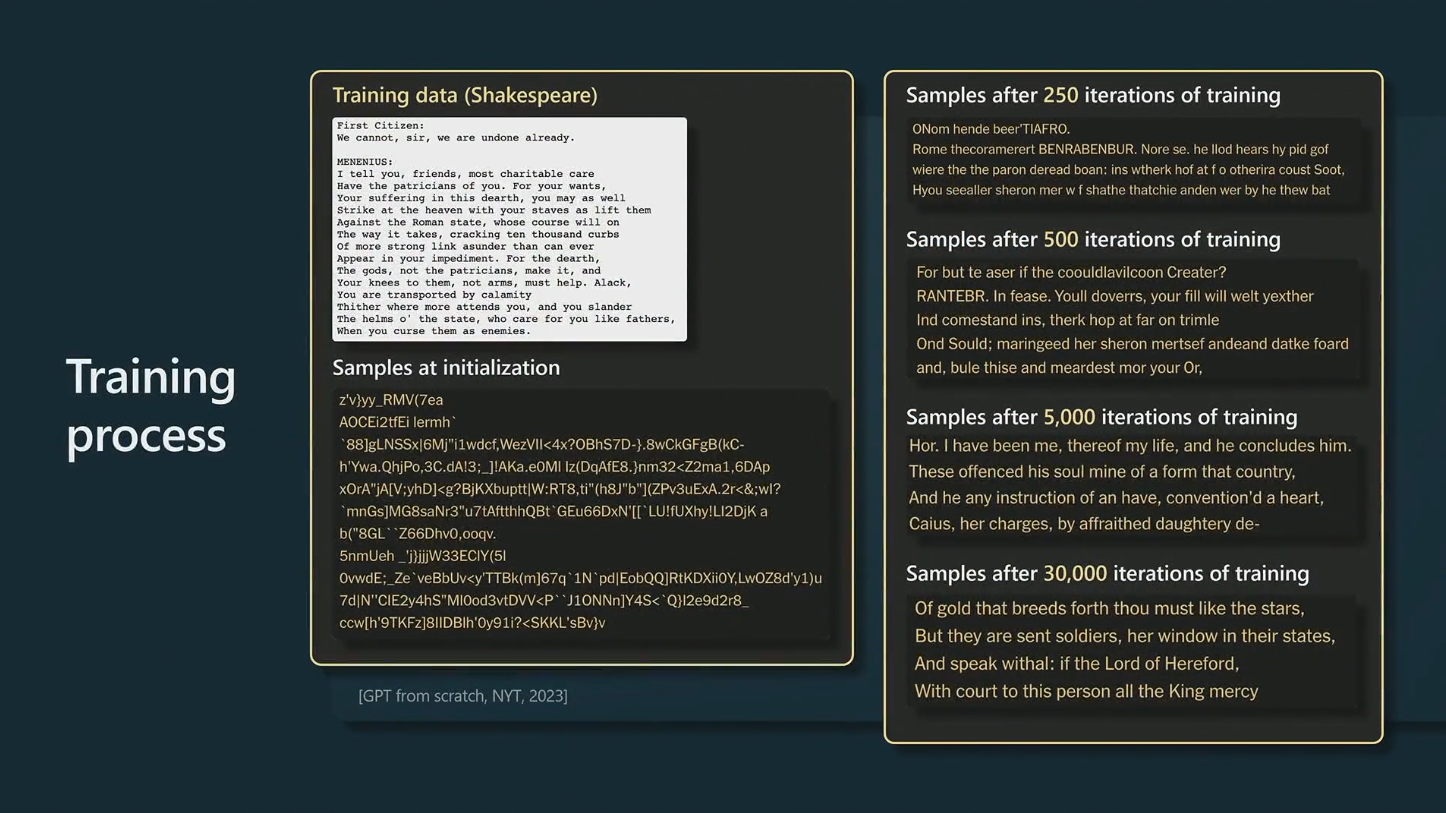
Figure courtesy of Andrej Karpathy

Assistant models

Trained (fine-tuned) to have conversations: turn-taking, question answering, not being [rude/sexist/racist].

  • Foundation model has learned to predict all kinds of text, including both desirable and undesirable text.
  • Fine-tuning is a process narrow down the space of all possible output to only desirable, human-like dialogue.

Reinforcement learning from human feedback (RLHF)
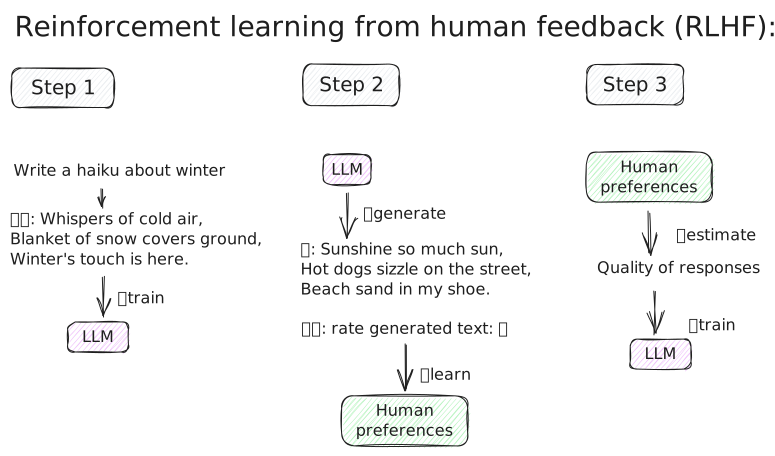
Model is aligned with the values of the fine-tuner.

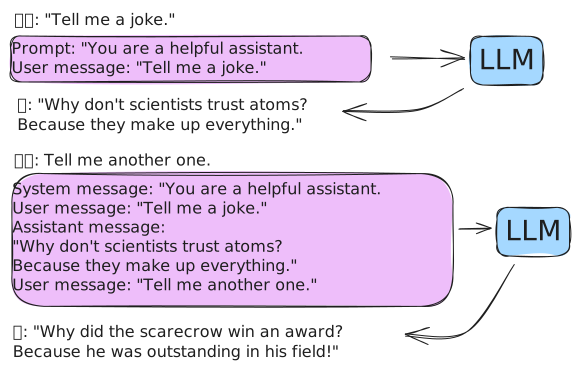
How do Chatbots work?

  • Designed to present the illusion of a conversation between two entities.

How do chatbots actually work?

An assistant model is a role-play simulator

  • An assistant is trained to respond to user prompts in a human-like way.
  • Simulates possible human conversations.
  • Has no intentions. It is not an entity with its own goals.
  • Does not have a “personality” or “character” in the traditional sense. It can be thought of as a role-playing simulator.
  • Has no concept of “truth” or “lying”. The model is not trying to deceive the user, it is simply trying to respond in a human-like way.

Hallucination

  • LLMs can generate text that is not true, or not based on any real-world knowledge.
  • This is known as “hallucination”. A better term would be “confabulation”.

Can an LLM tell the truth?

  • How would you know if an LLM is able to give you factual information?
  • How would you test this?

: What is the capital of Uzbekistan?

: Tashkent

It looks like the LLM knows the capital of Uzbekistan1.

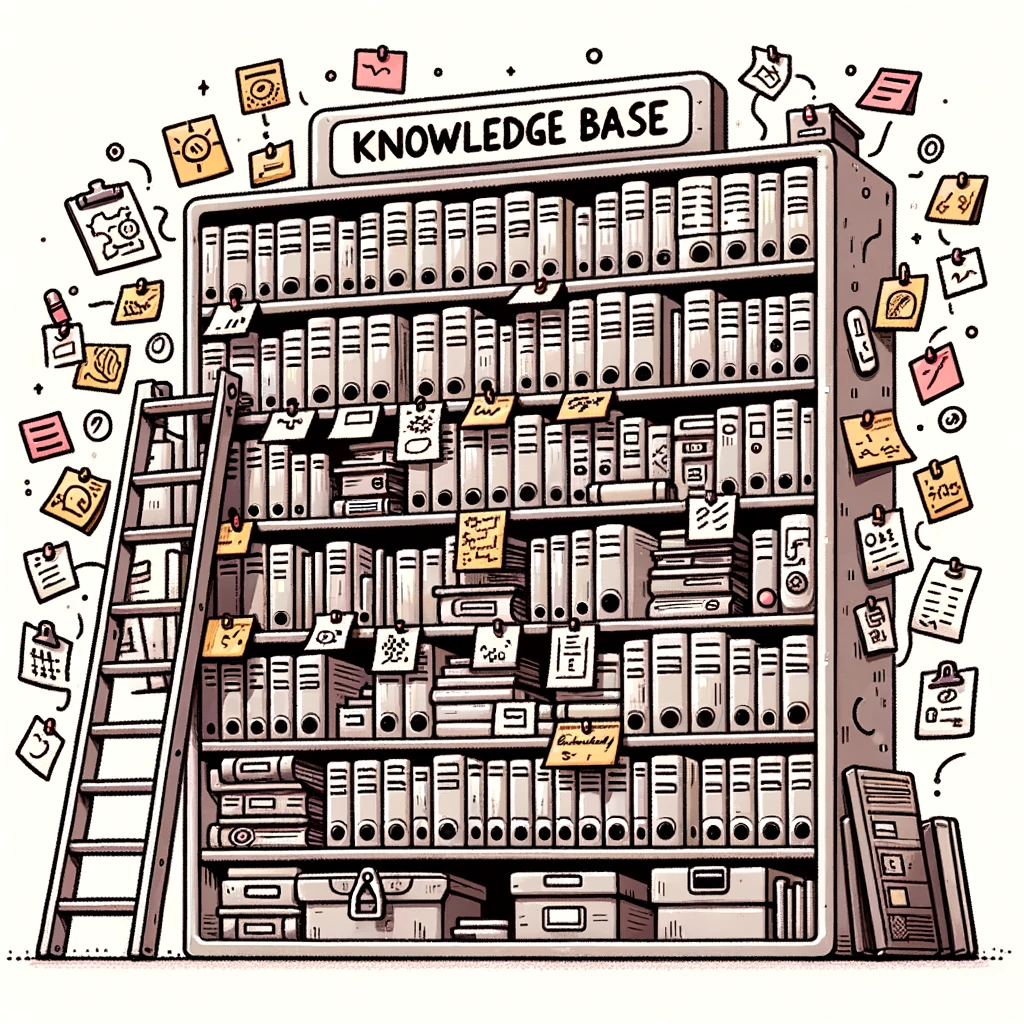
Knowledge base

  • A knowledge base is a collection of facts about the world.
    • You can ask (retrieve) and tell (store) facts.
  • An LLM is not a knowledge base.
    • LLMs generate text based on on how probable the next word is given the context, not based on stored facts.
What are LLMs good at?

  • Fixing grammar, bad writing, etc.
  • Rephrasing
  • Analyze texts
  • Write computer code
  • Answer questions about a knowledge base
  • Translate languages
  • Creating structured output
  • Factual output only with external documents or web search

Prompting

What is a prompt?

  • Remember: the goal of an LLM is complete text.
  • A prompt is a piece of text (instruction) that is given to a language model to complete.

PROMPT : Write a haiku about a workshop on large language models.

ASSISTANT : Whispers of circuits,
Knowledge blooms in bytes and bits,
Model learns and fits.

  • The response is generated as continuation of the prompt.

Unlocking knowledge

  • LLMs learn to do things they were not explicitly trained to do.
  • Often, these capabilities need to be “unlocked” by the right prompt.
  • But what is the right prompt?
  • The answer is very similar to what you would tell a human dialogue partner/assistant.
  • You can increase the probability of getting the desired output by asking good questions or giving enough information.

Basics of prompting

OpenAI give a set of strategies for using their models effectively:

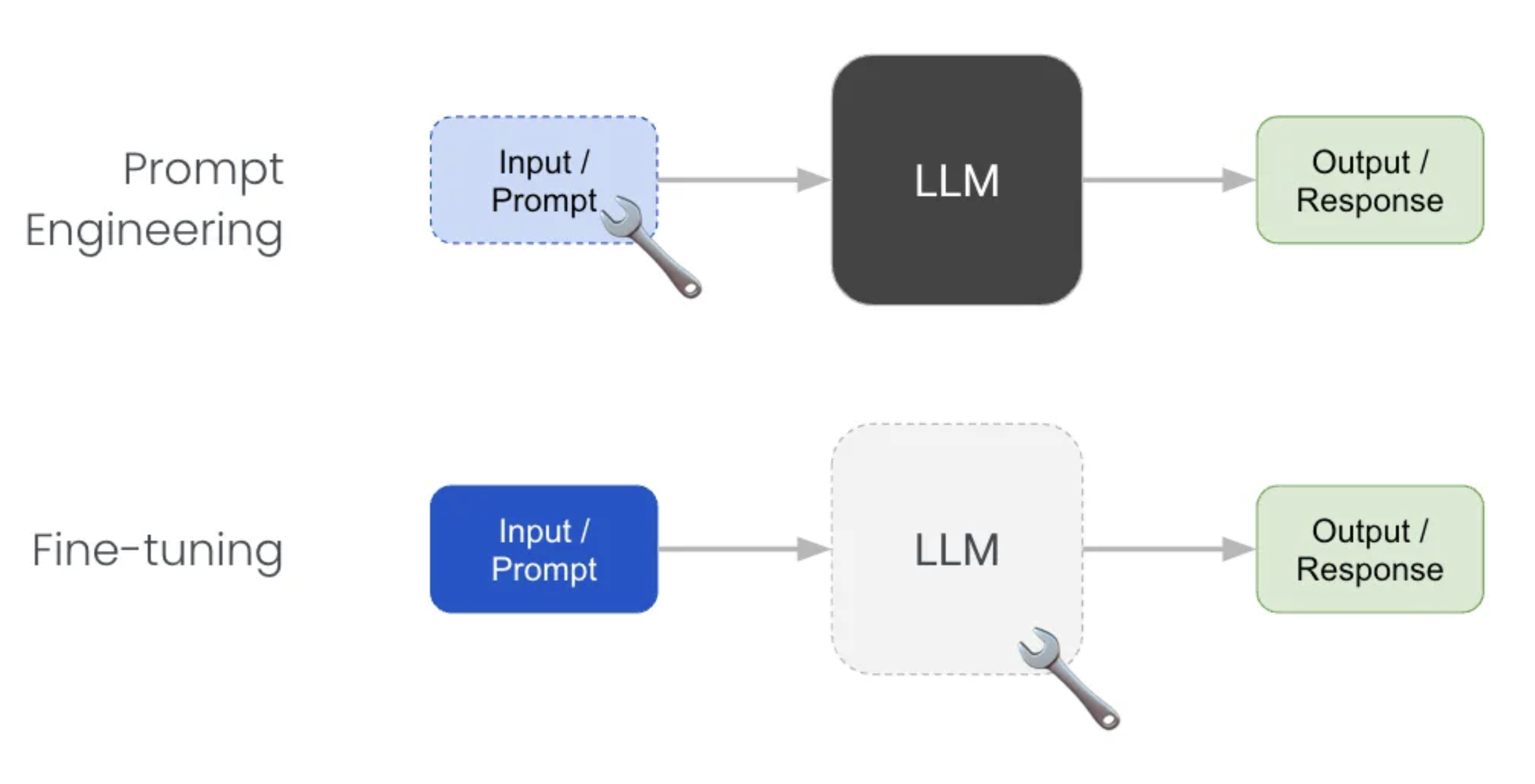
Prompt engineering

These include:

  • writing clear instructions
  • providing reference texts
  • splitting tasks into subtasks
  • giving the LLM ‘time to think’
  • using external tools

Writing clear instructions

Adopt a persona (role)

: You are an expert on learning techniques. Explain the concept of ‘flipped classroom’ in one paragraph.

: You are an expert financial derivatives. Explain the concept of ‘flipped classroom’ in one paragraph.

Provide reference texts

  • Provide a model with trusted and relevant information.
  • Then instruct the model to use the provided information to compose its answer.

Instruct the model to answer using a reference text

Giving GPT ‘time to think’

  • LLMs generate text one word at a time–the model spends the same amount of computation on each word.
  • Giving the model more context gives it more steps to “think”.
  • This increases the chances that the model will give a good answer.
  • This technique is known as chain-of-thought prompting, and can often be induced by simply instructing the model to think step-by-step or Take a deep breath and work on this problem step-by-step (Yang et al. 2023).

Chain-of-thought prompting

  • Chain-of-thought prompting encourages the LLM to “explain” its intermediate reasoning steps.
  • Enables complex reasoning and problem solving.

Instead of this:

: The odd numbers in this group add up to an even number: 4, 8, 9, 15, 12, 2, 1. Yes or no?

Do this:

: Is this statement correct? The odd numbers in this group add up to an even number: 4, 8, 9, 15, 12, 2, 1.

Reason through the problem step-by-step. Start by identifying the odd numbers. Next, add them up. Finally, determine if the sum is even or odd. Write down your reasoning steps in a numbered list.

Zero-shot chain-of-thought prompting

: The odd numbers in this group add up to an even number: 4, 8, 9, 15, 12, 2, 1. Take a deep breath and think step-by-step.

Use Markdown formatting

  • Use Markdown to format your prompts.
  • Instruct the LLM to format its output using Markdown.

: Improve this haiku:

Words weave through the air,
Minds meld with machine’s deep thought,
Knowledge blooms anew.

It is about about a workshop on large language models. I’m not happy with it.

Show me all the text. Format your edits as **TEXT** and show the deleted text as ~~TEXT~~. Keep you review short (max 100 words).

Try this example in ChatGPT.

Advanced prompting techniques

For more advanced prompting techniques, see these websites:

and explore this activity.

Advanced LLM techniques

Retrieval-augmented generation (RAG)
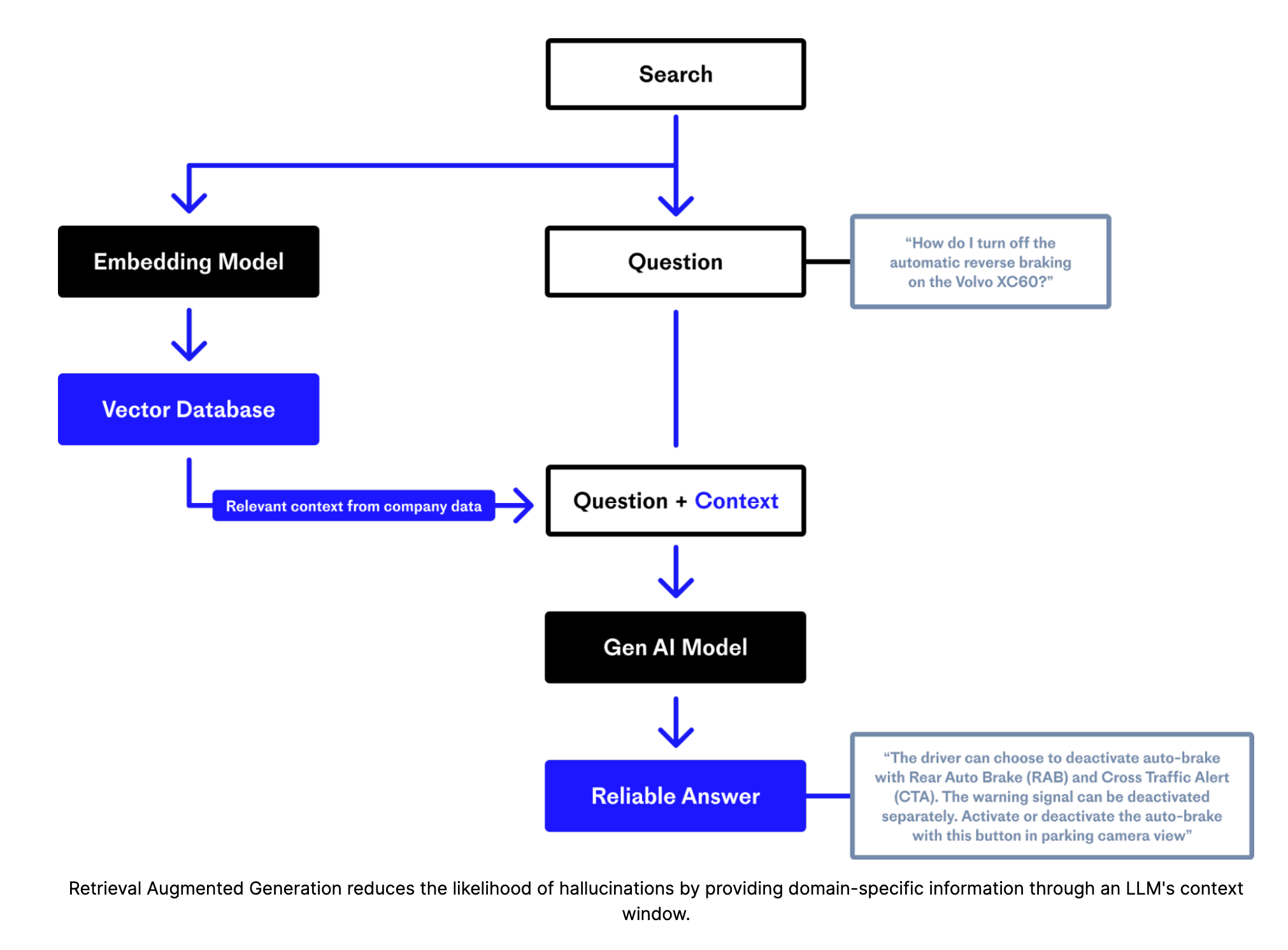
Figure courtesy of Pinecone

External tools

  • LLMs can be instructed to use external tools to complete tasks.
  • For example, an LLM can be instructed to use a calculator to perform arithmetic.
  • OpenAI calls this approach function calling.

Multi-agent conversations

Local models

  • Download and run models, such as e.g. Llama 2 or Code Llama, locally.
  • Ollama
  • LM Studio

Hardware requirements:

  • Apple Silicon Mac (M1/M2/M3) / Windows / Linux
  • 16GB+ of RAM is recommended
  • NVIDIA/AMD GPUs supported

References

Shanahan, Murray. 2023. “Talking About Large Language Models.” January 25, 2023. https://doi.org/10.48550/arXiv.2212.03551.
Shanahan, Murray, Kyle McDonell, and Laria Reynolds. 2023. “Role-Play with Large Language Models.” May 25, 2023. https://doi.org/10.48550/arXiv.2305.16367.
Wei, Jason, Yi Tay, Rishi Bommasani, Colin Raffel, Barret Zoph, Sebastian Borgeaud, Dani Yogatama, et al. 2022. “Emergent Abilities of Large Language Models.” October 26, 2022. https://doi.org/10.48550/arXiv.2206.07682.
Yang, Chengrun, Xuezhi Wang, Yifeng Lu, Hanxiao Liu, Quoc V. Le, Denny Zhou, and Xinyun Chen. 2023. “Large Language Models as Optimizers.” September 6, 2023. http://arxiv.org/abs/2309.03409.